October 13, 2026
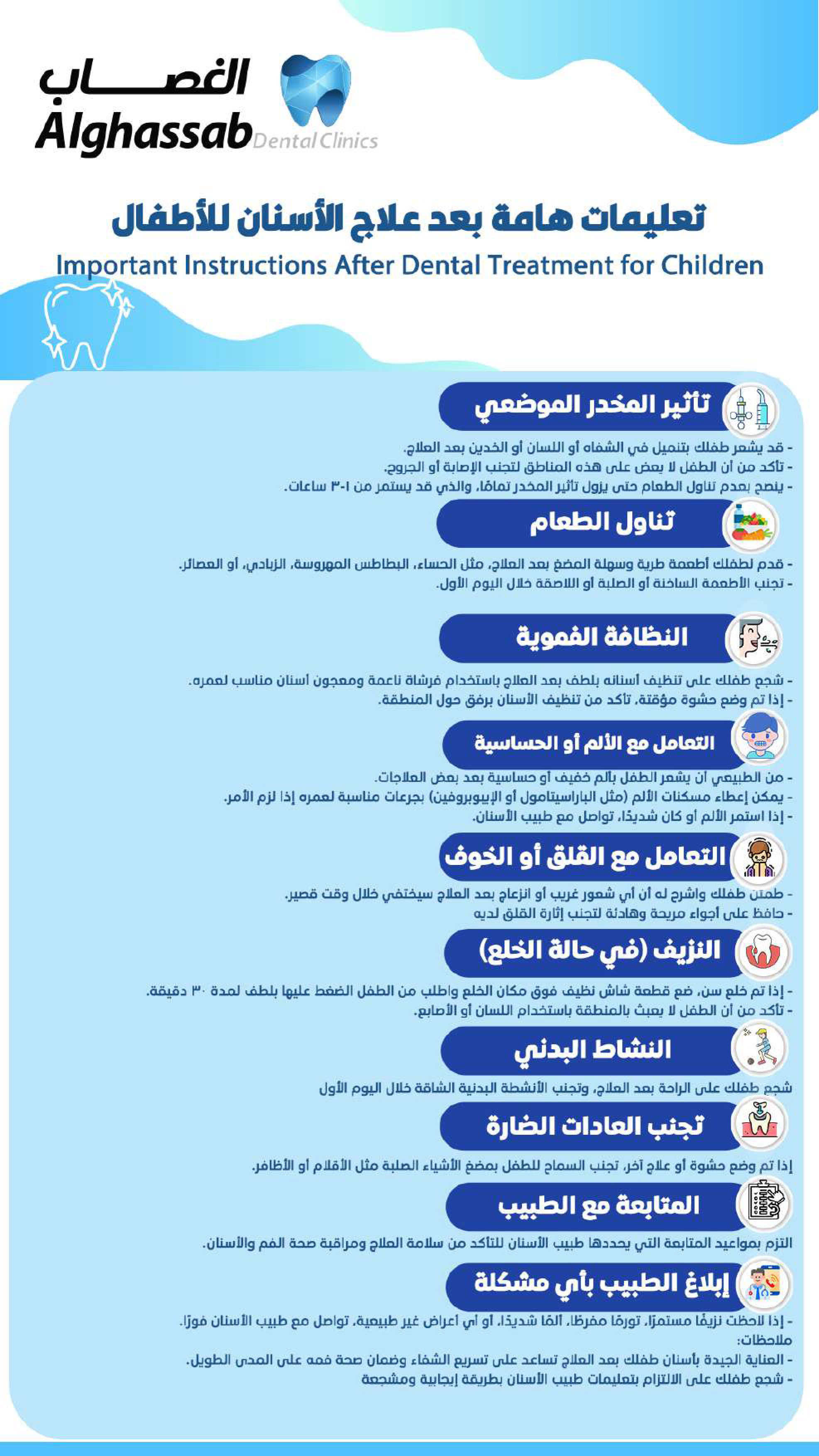
Important Instructions After Dental Treatment for Children
Encourage your child to follow dental care guidelines in a positive, supportive way to ensure rapid healing.



• Your child may feel numbness in their lips, tongue, or cheeks after treatment.
• Make sure your child does not bite or chew on these areas to avoid accidental cuts or injuries.
• It is recommended to avoid eating until the anesthetic has completely worn off, which usually takes 1 to 3 hours.
• Offer soft, easy-to-chew foods after treatment, such as soups, mashed potatoes, yogurt, or smoothies.
• Avoid hot, hard, or sticky foods during the first 24 hours.
• Encourage your child to brush gently after treatment using a soft-bristled toothbrush and age-appropriate toothpaste.
• If a temporary filling was placed, clean gently around the treated area.
• Mild tenderness or sensitivity is normal following certain procedures.
• Age-appropriate over-the-counter pain relievers (such as paracetamol or ibuprofen) may be administered if necessary.
• If pain persists or worsens, consult your dentist.
• Reassure your child that any unusual sensation or numbness will fade quickly.
• Maintain a calm, relaxing environment to keep them at ease.
• If a tooth was extracted, place a clean piece of sterile gauze over the site and have the child bite down gently for 30 minutes.
• Make sure the child does not touch or poke the extraction site with their fingers or tongue.
• Encourage your child to rest after treatment and avoid strenuous physical play during the first day.
• If a filling or restoration was placed, prevent the child from chewing on hard objects such as pencils or fingernails.
• Keep all scheduled follow-up visits to ensure healing progresses smoothly and monitor oral health.
• If you notice persistent bleeding, excessive swelling, severe pain, or any unusual symptoms, contact your dentist immediately.
• Proper post-treatment care promotes rapid recovery and protects your child's long-term dental health.
• Support and encourage your child positively throughout their recovery.